Sunlight is too valuable to simply shut out.
You know those moments when the light gives everything a richness you wish would last?
A beautiful afternoon. The warmth of natural daylight. The richness it brings to colors, landscapes, food and the places we love. We don’t always want to escape the sunshine. Sometimes we just want to experience it differently.
Daylight matters. Our relationship with light extends beyond what we see. Daylight helps regulate our biological rhythms, and researchers continue to explore its relationship with sleep, health and well-being. Our ambition is simple: create more inviting places to enjoy daylight and outdoor life.
Not all shade treats sunlight the same way.
Sunlight contains many wavelengths. The Sunglass canopy doesn’t treat them all equally: the supplied transmission curve shows strong reduction at shorter wavelengths, with a greater percentage of longer wavelengths passing through.
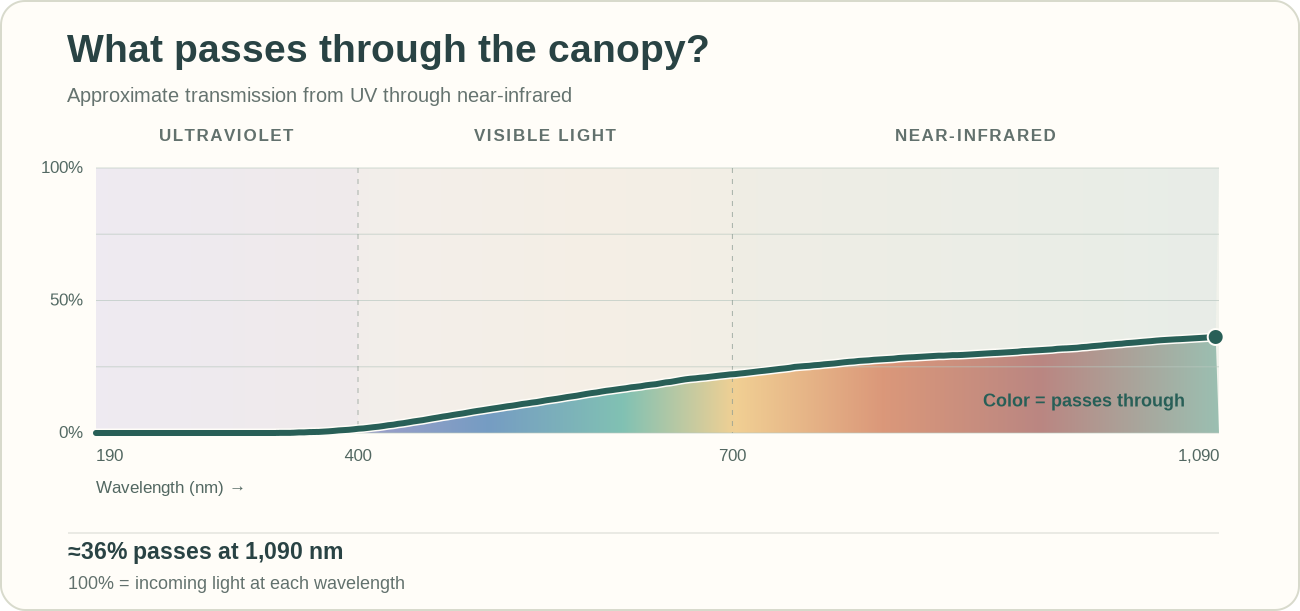
How Sunglass filters light.
Moving left to right, the wavelengths get longer. The higher the curve, the more light passes through.
In the supplied curve, transmission stays near zero at the shortest measured wavelengths, then rises across the visible spectrum and into near-infrared, reaching approximately 36% near 1,090 nanometers.
That helps explain why the daylight beneath Sunglass looks different, not just darker.
More than a feeling.
In a 2024 observational study of 88,905 adults, brighter daytime light and darker nights were associated with lower mortality risk during follow-up. These findings concern everyday light exposure, not Sunglass, and do not establish causation. Read the study ↗
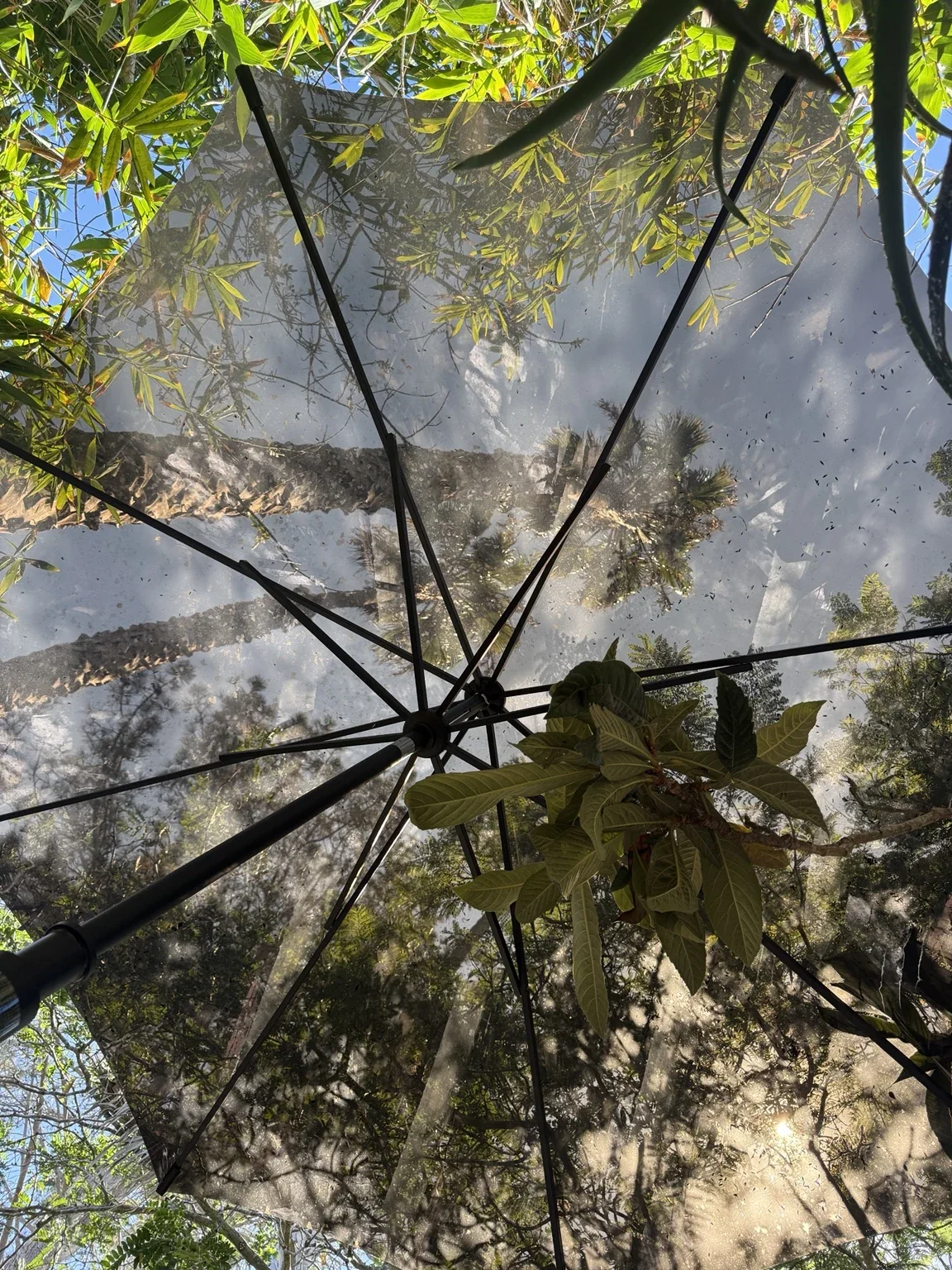
What happens beneath the shade still needs to be seen.
Food, faces, merchandise, a project you’re working on. Shade doesn’t have to mean shutting out the light.
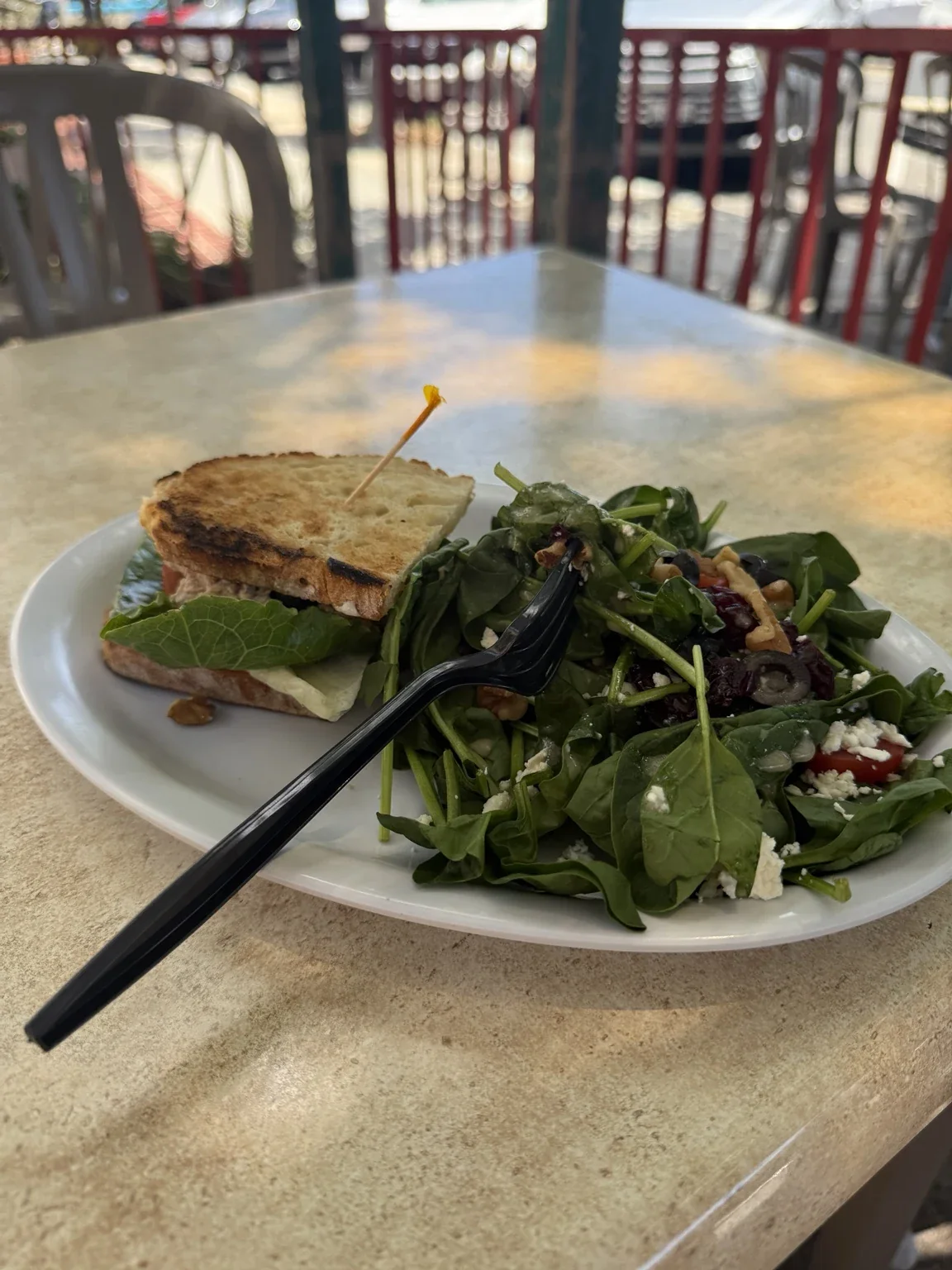
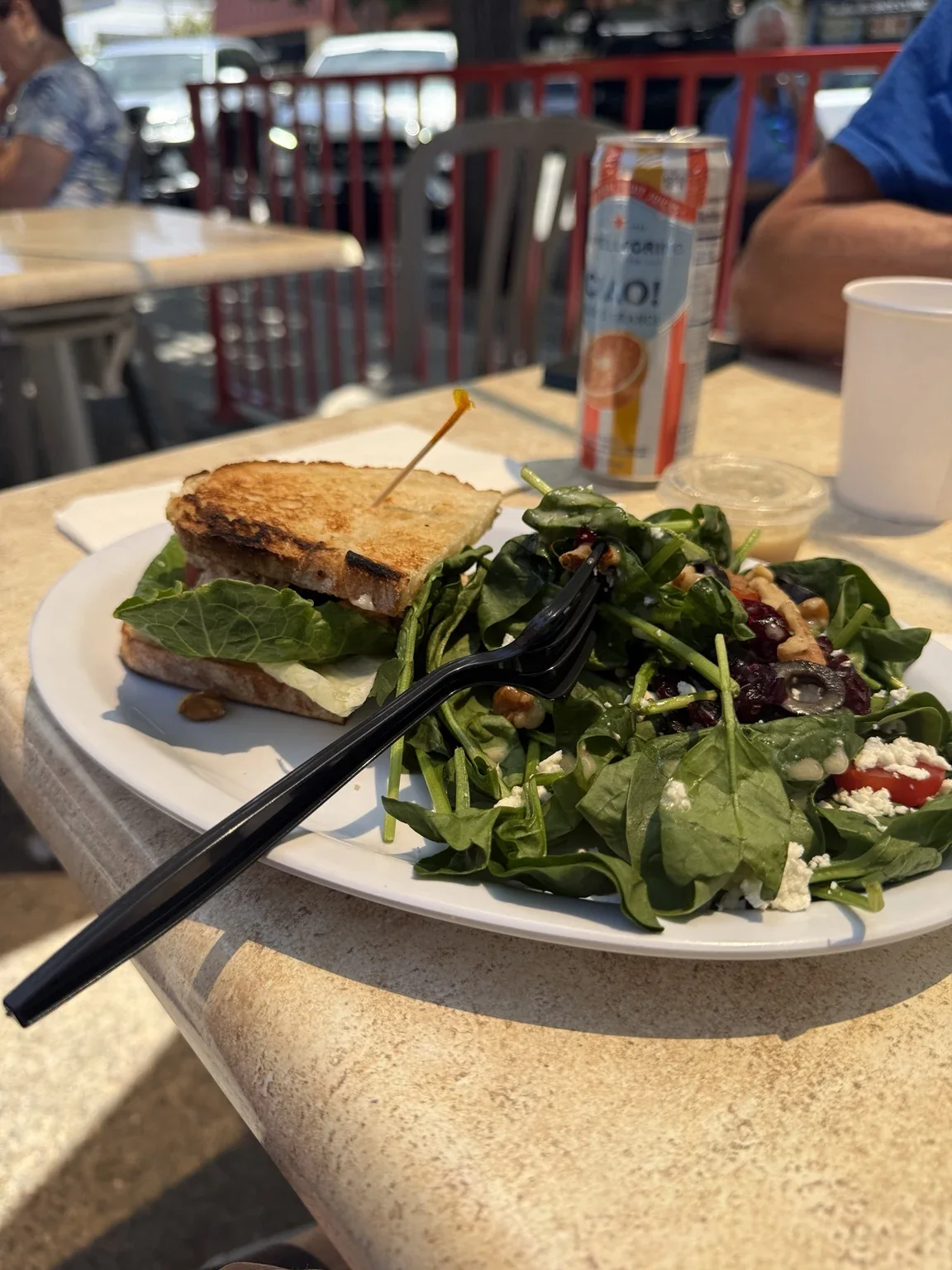
An everyday café comparison, photographed in two kinds of shade.
Wherever direct sun is interfering with what needs to happen, but darkness is not the answer…Sunglass is.